The digital landscape is undergoing a monumental shift as artificial intelligence moves from a futuristic concept to a foundational tool for businesses worldwide. Marketing departments are no longer just exploring the possibilities of machine learning; they are actively integrating these technologies to streamline workflows and gain a competitive edge.
Understanding how AI automation is changing digital marketing is essential for any brand looking to remain relevant in an era where data speed and personalization define success.
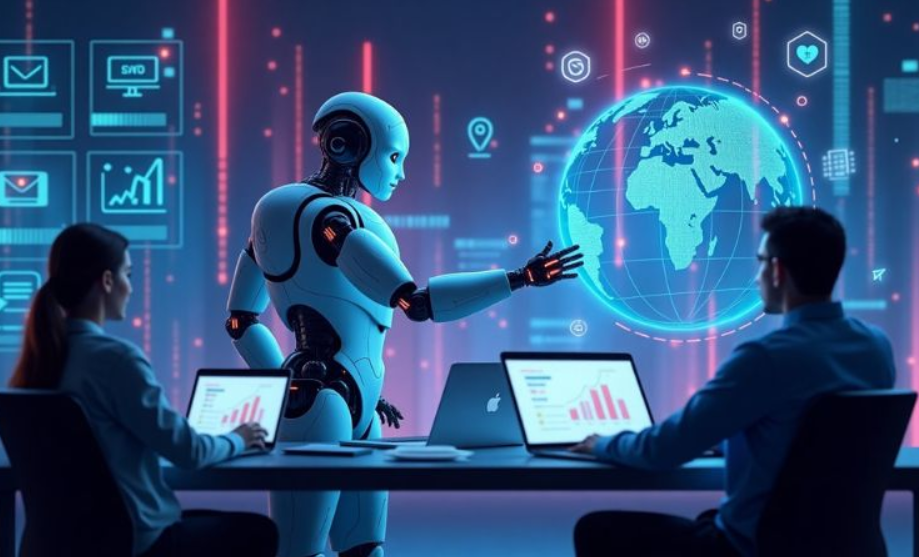
This transformation is driven by the sheer volume of data generated by modern consumers. Traditional manual analysis is no longer sufficient to track the intricate journey a customer takes before making a purchase.
AI automation fills this gap by processing vast datasets in real-time, allowing marketers to predict behaviors and automate responses with a level of precision that was previously impossible. It is not just about doing things faster; it is about doing things smarter by leveraging algorithmic insights to drive every strategic decision.
As organizations adopt these new technologies, the focus is shifting toward creating more human-centric experiences through automated means. While it might sound contradictory, AI allows brands to scale intimacy.
By handling repetitive tasks like data entry, basic lead scoring, and routine email deployments, marketing professionals can spend more time on high-level creative strategy and emotional storytelling. This synergy between human creativity and machine efficiency is the hallmark of the current digital marketing revolution.
The Evolution of Marketing Through Automation
The journey of digital marketing began with simple banner ads and generic email blasts, but the introduction of automation has turned it into a sophisticated ecosystem. In the early days, automation was limited to basic triggers, such as sending a welcome email when someone signed up for a newsletter.
Today, the landscape is far more complex, involving neural networks and predictive modeling that can anticipate what a customer wants before they even express it. This shift marks a transition from reactive marketing to proactive engagement.
Modern AI tools are capable of analyzing historical data to identify patterns that human analysts might overlook. For example, an AI system can determine the exact time of day a specific user is most likely to engage with social media content and automatically schedule posts to appear at that peak moment.
This level of optimization ensures that marketing budgets are spent more effectively, reducing waste and increasing the return on investment for digital campaigns across all platforms.
Furthermore, the democratization of AI means that these powerful tools are no longer reserved for tech giants with massive budgets. Small and medium-sized enterprises can now access cloud-based AI platforms to automate their customer service, content distribution, and ad bidding.
This leveling of the playing field is forcing brands to compete on the quality of their insights and the relevance of their messaging rather than just the size of their advertising spend.
Hyper-Personalization: Beyond First Name Tags
Personalization has always been a goal for marketers, but AI automation has elevated it to a level known as hyper-personalization. This involves using real-time data to deliver highly relevant content, product recommendations, and services to each individual user.
Instead of segmenting audiences into broad groups based on age or location, AI allows for “segments of one,” where the marketing experience is tailored specifically to the unique behavior and preferences of a single person.
The mechanism behind this involves several layers of data processing and automated execution:
- Behavioral Tracking: Monitoring how a user interacts with a website, including pages visited, time spent on specific sections, and items added to a cart.
- Contextual Analysis: Considering external factors such as the user’s current weather, local events, or the device they are using to refine the message.
- Predictive Recommendations: Utilizing collaborative filtering algorithms—similar to those used by Netflix or Amazon—to suggest products the user is likely to purchase next.
- Dynamic Content: Automatically changing the images, headlines, and calls-to-action on a landing page based on the visitor’s profile.
When these elements work together, the result is a seamless customer experience that feels intuitive rather than intrusive. A customer might receive a push notification for a discount on a pair of running shoes exactly when they are near a physical store and shortly after they searched for marathon training tips.
This synchronization of timing and intent is the peak of AI-driven marketing automation.
The Impact of Generative AI on Content Strategy
Content remains the backbone of digital marketing, but the demand for high-quality, frequent updates can overwhelm traditional creative teams. Generative AI is changing this dynamic by assisting in the creation of text, images, and video at scale.
While human oversight remains critical for brand voice and factual accuracy, AI tools act as powerful accelerators that can draft blog posts, generate social media captions, and create visual assets in seconds.
This shift allows for a more iterative approach to content marketing. Instead of spending weeks on a single campaign asset, marketers can use AI to produce dozens of variations for A/B testing.
This data-driven approach to creativity ensures that the final content delivered to the audience is the version most likely to generate engagement and conversions. It also frees up writers and designers to focus on complex narrative structures and brand positioning.
However, the rise of AI-generated content also brings challenges regarding authenticity and SEO. Search engines are becoming more sophisticated in identifying low-effort, AI-generated “slop” that provides no value to users.
Therefore, the most successful strategies involve using AI to build a strong foundation—such as outlining, researching, and drafting—while relying on human editors to inject personality, expertise, and unique perspectives that resonate with real people.
Revolutionizing Search Engine Optimization (SEO)
SEO is perhaps one of the areas most transformed by AI automation. Search engines themselves, particularly Google with its Search Generative Experience (SGE), are now powered by complex AI models.
To keep up, marketers must use similar tools to optimize their websites. AI can now automate keyword research, identify content gaps, and even perform technical audits that would take a human specialist days to complete.
One of the most significant changes is how AI handles “Search Intent.” Old SEO focused on keyword density, but modern AI-driven SEO focuses on answering the user’s underlying question.
Tools can now analyze the top-ranking pages for a specific query and provide a blueprint of the topics and subtopics that must be covered to be considered authoritative. This ensures that content is not just optimized for bots, but truly useful for humans.
Furthermore, AI automation is playing a massive role in voice search and visual search optimization. As more users interact with devices like Alexa or use Google Lens to find products, the underlying SEO strategies must adapt.
AI helps in structuring data and optimizing for natural language processing, ensuring that a brand’s information is accessible across all the different ways consumers now search for information online.
Automated Programmatic Advertising
Programmatic advertising is the automated buying and selling of online advertising space. Before AI, this process involved manual negotiations and manual ad placements, which were inefficient and prone to error.
AI automation has turned this into a real-time bidding environment where ads are bought and sold in the milliseconds it takes for a webpage to load. This ensures that the right ad is shown to the right user at the perfect moment.
The efficiency of programmatic advertising lies in its ability to use machine learning to optimize bids. An AI system can analyze thousands of variables—such as the user’s browsing history, the site’s relevance, and the historical performance of the ad—to decide exactly how much to bid for a specific impression.
This prevents overspending on low-value traffic and maximizes the impact of the advertising budget.
Beyond bidding, AI is also used for “Creative Optimization” within ads. Automated systems can test different combinations of headlines, images, and buttons in real-time, automatically funneling the budget toward the combinations that perform best.
This means that a single campaign can effectively “learn” and improve its own performance as it runs, leading to significantly higher conversion rates over time.
The Role of AI in Customer Retention and Churn Prediction
Acquiring a new customer is significantly more expensive than retaining an existing one. AI automation is a game-changer for retention because it can identify the early warning signs of a customer who is about to leave.
By analyzing patterns such as a decrease in login frequency, a change in support ticket volume, or a shift in purchasing habits, AI can flag “at-risk” customers for immediate intervention.
Once identified, automated workflows can trigger personalized re-engagement campaigns. This might include a special discount offer, a personalized video message, or a check-in from a customer success representative.
Because these actions are automated, they happen instantly, often preventing the customer from moving to a competitor before a human employee would have even noticed the change in behavior.
In addition to preventing churn, AI helps in increasing “Customer Lifetime Value” (CLV). By analyzing the purchasing history of loyal customers, AI can predict which higher-tier products or complementary services they might be interested in.
This allows for automated upselling and cross-selling that feels helpful and relevant rather than pushy, strengthening the relationship between the brand and the consumer.
Comparing Human-Led vs. AI-Augmented Marketing
To truly understand the shift, it is helpful to compare traditional marketing methods with the new AI-augmented approach. While the core goals of marketing remain the same—to build awareness and drive sales—the execution has changed drastically.
| Feature | Traditional Manual Marketing | AI-Augmented Marketing |
|---|---|---|
| Data Analysis | Manual reports, often weeks out of date. | Real-time dashboards and predictive insights. |
| Personalization | Broad segments (e.g., “Males 18-35”). | Individual profiles and hyper-personalized content. |
| Content Creation | Fully manual, slow production cycles. | AI-assisted drafting and automated scaling. |
| Customer Support | Human staff restricted by office hours. | 24/7 Intelligent chatbots and instant resolution. |
| Ad Optimization | Periodic manual adjustments to bids. | Millisecond-level automated bidding and testing. |
As seen in the table, the primary difference is the speed and granularity of the work. AI does not replace the marketer; it provides the marketer with a more powerful set of tools to execute their vision at a scale that was previously unimaginable.
How to Implement AI Automation in Your Strategy
Starting with AI automation can feel overwhelming, but the best approach is to begin with specific, high-impact areas. Identifying the most time-consuming or data-heavy tasks in a current workflow is the first step toward successful integration.
It is important to view AI as an iterative improvement rather than a total overnight overhaul.
For those looking to integrate these technologies, the following steps provide a clear roadmap for adoption:
- Identify Repetitive Tasks: List the activities that take up the most time but require the least creative input, such as data cleaning or basic reporting.
- Audit Your Data: AI is only as good as the data it is fed. Ensure that your customer data is clean, organized, and compliant with privacy regulations like GDPR.
- Select the Right Tools: Research platforms that specialize in your specific needs, whether it’s an AI-driven CRM, an automated email platform, or a programmatic ad tool.
- Start a Pilot Program: Test the AI tool on a small campaign or a specific segment of your audience to measure its effectiveness before rolling it out globally.
- Train Your Team: Ensure that your staff understands how to interpret AI insights and how to use generative tools responsibly and ethically.
- Monitor and Refine: Constantly review the performance of automated systems and make adjustments based on the results to ensure they align with brand goals.
By following these steps, organizations can transition smoothly into an automated environment, minimizing disruption while maximizing the benefits of the new technology.
The Ethics and Transparency of AI in Marketing
As AI becomes more integrated into marketing, ethical considerations move to the forefront. Consumers are becoming increasingly aware of how their data is used, and there is a growing demand for transparency.
Brands that use AI automation must be careful to maintain trust by being clear about when a user is interacting with an AI and how their personal information is being processed to drive automated decisions.
One major concern is algorithmic bias. If the data used to train an AI is biased, the resulting marketing decisions will also be biased, potentially excluding certain demographics or reinforcing negative stereotypes.
Marketing teams must actively audit their AI systems to ensure fairness and inclusivity. This is not just a moral obligation but a business one, as biased algorithms can lead to significant brand damage and loss of customer loyalty.
Privacy is another critical pillar. With the phase-out of third-party cookies, AI automation is shifting its focus toward “zero-party” and “first-party” data—information that customers voluntarily share with a brand.
This shift requires a value exchange; customers must feel that they are getting something worthwhile in return for their data, such as a better user experience or more relevant offers. Respecting privacy is the only way to sustain long-term automated marketing efforts.
Future Trends: What to Expect Next
The evolution of AI in digital marketing is far from over. In the coming years, we can expect to see even deeper integration of AI into every facet of the consumer journey.
One emerging trend is the rise of “Autonomous Marketing Agents.” These are AI systems that are given a high-level goal—such as “increase sales by 10% in the third quarter”—and then left to devise and execute the entire strategy across multiple channels independently.
Another major development is the integration of AI with the Internet of Things (IoT). As smart devices become more common in homes, AI will be able to market to consumers through their refrigerators, mirrors, and cars.
This will create a truly omni-channel experience where the brand is present exactly when the consumer has a need, often before they even pick up a smartphone.
Finally, we will see a greater focus on “Emotional AI.” This involves technology that can detect a user’s mood through their voice, facial expressions, or typing patterns and adjust the marketing message accordingly.
If an AI detects that a customer is frustrated, it might offer an immediate discount or connect them with a human agent to resolve their issue, turning a potentially negative experience into a positive one.
Conclusion: Embracing the AI-Powered Future
AI automation is not just a trend; it is the new standard for digital marketing. By enabling hyper-personalization, streamlining content creation, and optimizing advertising spend in real-time, AI allows brands to connect with their audiences more effectively than ever before.
The transition from manual processes to automated insights is creating a more efficient, responsive, and data-driven industry that benefits both businesses and consumers.
However, the key to success lies in the balance between technology and humanity. While AI can handle the data and the execution, it is the human marketers who provide the vision, the empathy, and the ethical guardrails.
Organizations that embrace AI as a partner rather than a replacement will be the ones that thrive in this rapidly changing digital landscape. The future belongs to those who can harness the power of automation to deliver truly meaningful and personalized human experiences at scale.
Frequently Asked Questions (FAQ)
Does AI automation replace human marketers?
No, AI automation is designed to augment human capabilities, not replace them. While it handles repetitive tasks and data analysis, humans are still required for creative strategy, emotional connection, and ethical decision-making.
The role of the marketer is evolving from execution to oversight and strategy.
Is AI automation expensive for small businesses?
While some enterprise-level AI tools are costly, many affordable cloud-based solutions now exist. Many popular marketing platforms, such as Mailchimp, Canva, and HubSpot, have integrated AI features into their standard packages, making automation accessible to businesses of all sizes.
How does AI improve the customer experience?
AI improves the customer experience by providing more relevant content and faster service. Through hyper-personalization, customers see products and information that actually interest them, and AI-powered chatbots provide instant support 24/7, reducing wait times and frustration.
Will AI-generated content hurt my SEO?
It can if the content is low-quality or lacks original insight. Google and other search engines prioritize helpful, reliable, and people-first content.
Using AI to help with research and drafting is fine, but it should be heavily edited by humans to ensure it provides real value and unique perspectives to the reader.
How do I protect customer privacy while using AI?
Protecting privacy involves being transparent about data collection and complying with regulations like GDPR. Marketers should focus on first-party data and ensure that all AI systems have robust security measures in place.
Providing users with clear options to opt-out or manage their data is also essential for maintaining trust.